Should you pay off debt or save for a down payment first?
It is a genuinely hard question, and the honest answer is that it depends on a handful of factors you can measure. What follows is the reasoning, not a prescription — your situation, and any professional advice you take, should decide it.
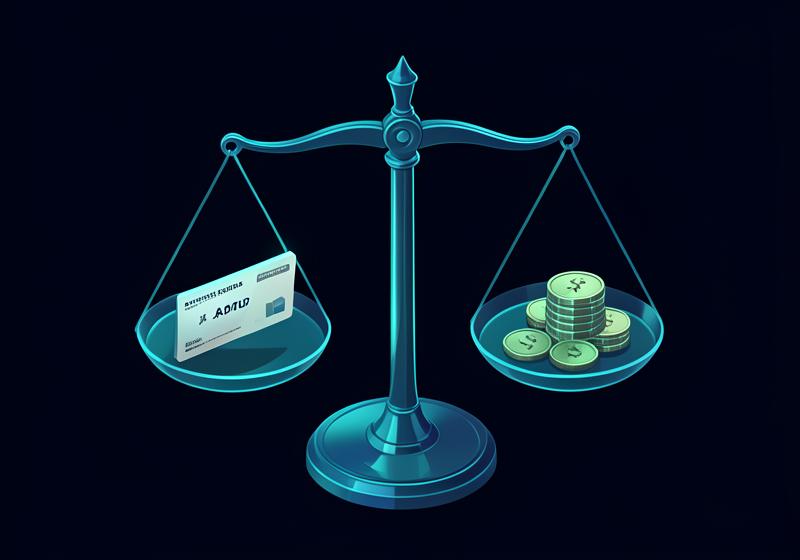
Compare the interest rates honestly
The clearest case is arithmetic. If a debt costs considerably more than your savings earn, money directed at that debt does more work than the same money sitting in an account. High-rate revolving credit is almost always in this category.
Lower-rate structured debt — some student borrowing, a very cheap car finance deal — is a closer call, and there the other factors below carry more weight.
Keep a buffer regardless
Clearing every account to zero while holding no cash is a fragile position. One unexpected bill puts the debt straight back on, usually at a worse rate.
A small emergency buffer is not a competing goal — it is what makes debt repayment sustainable. Build it first, then direct the surplus.
Remember that debt affects borrowing capacity
Existing monthly commitments reduce what a lender considers affordable, so paying down debt can improve your position twice: it lowers your costs and it improves how your application reads.
That said, a deposit that is too small has its own consequences, sometimes including a higher rate. Neither side of this trade is free.
How soon do you actually want to buy?
If a purchase is realistically five years away, clearing expensive debt first and saving hard afterwards often ends up ahead. If you are buying within a year, disrupting a deposit that is nearly complete may not make sense.
Be honest about the timeline rather than optimistic. Most people who say next year mean the year after.
A reasonable order for most people
There is no universal sequence, but this ordering suits a lot of situations and is easy to reason about.
- Build a small cash buffer you will not touch
- Clear the highest-rate debt first
- Keep any employer savings match running throughout
- Then direct the surplus to the deposit
Go750 publishes educational information about money and housing. This article is not financial advice and Go750 does not offer or arrange financing.