7 housing costs people forget to budget for
Housing budgets tend to be built from the two numbers that are easiest to find: the rent or loan payment, and the utilities. Everything else gets discovered later. These seven costs are the ones that most often turn a comfortable budget into a tight one.

1. Maintenance and repairs
Appliances fail, roofs age, and boilers choose inconvenient moments. A common planning approach is to set aside a small percentage of the property's value each year, held separately from day-to-day savings. Older properties justify the higher end of that range.
For renters this is smaller but not zero — you are usually responsible for consumables and minor damage.
2. Property taxes or rates that move
These are reassessed periodically and rarely downward. Budgeting the current figure and assuming it will hold for a decade is optimistic. If your payment includes an escrow account, an increase here changes your monthly payment without any change to your loan.
3. Insurance, in more than one form
Buildings insurance is usually required by a lender. Contents insurance is not required but covers what you actually own. Depending on location you may also need flood or other specific cover, which can be a significant separate line.
4. Service charges and association fees
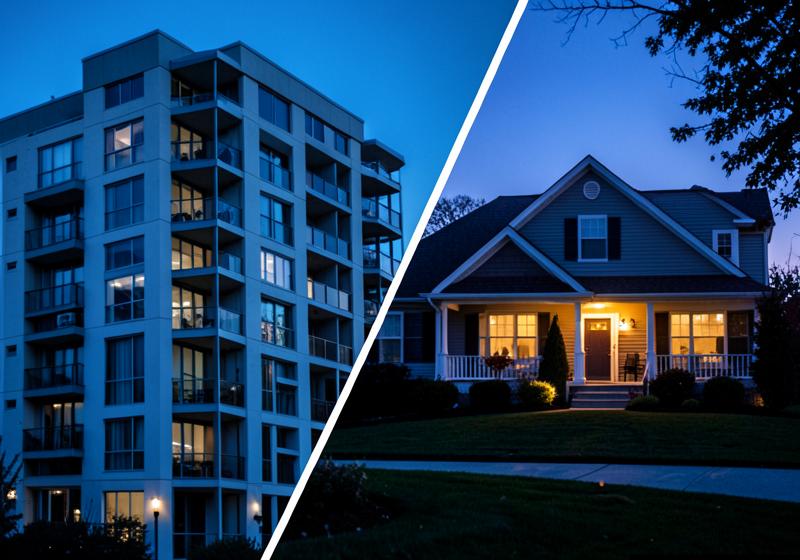
Flats and managed developments carry ongoing charges, and those charges can be raised. Some also levy occasional one-off assessments for major works such as roofing or external repairs. Reviewing the last few years of accounts before committing tells you how often that happens.
5. Moving in properly
The move itself, plus the things a home immediately needs: window coverings, basic tools, a lawnmower, appliances the previous occupant took, and the first round of small fixes. This tends to arrive in the same month as every other cost of moving.
6. Utilities at the new size
Heating and cooling scale with space and insulation quality. Moving from a small flat to a larger house frequently doubles energy costs, and water, waste, and broadband may all be priced differently in the new location.
7. The commute you just changed
A cheaper home that adds an hour of driving each day has a running cost. Fuel, transit passes, vehicle wear, and parking all belong in the housing comparison, because they were caused by the housing decision.
Turning all of it into one number
Add annual estimates for each of the seven, divide by twelve, and treat the result as a standing monthly line in your budget. Send it to a separate account so the money is there when the irregular bills arrive.
Go750 publishes educational information about money and housing. This article is not financial advice and Go750 does not offer or arrange financing.