Renting vs. buying: what should you compare?
Renting and buying get compared with a single line each: this much rent, that much mortgage. It is a tidy comparison and a misleading one. A fair version looks at everything that leaves your account under each arrangement, plus the things that are not money at all — flexibility, responsibility, and how long you expect to stay.
The costs that only exist when you own
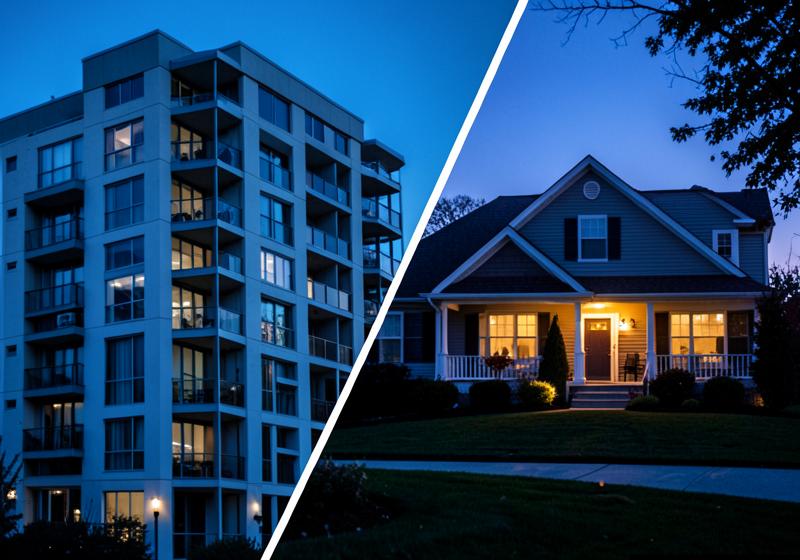
Owning brings a set of recurring costs a tenant never sees: property taxes or rates, buildings insurance, maintenance and repairs, and often a service charge. It also brings one-off costs at both ends — legal fees, surveys, transfer taxes, and moving costs when buying; agent fees and legal fees again when selling.
Those transaction costs are the reason the length of stay matters so much. Spread over ten years they are minor. Spread over two they can outweigh everything else in the comparison.
The costs that only exist when you rent
Renting has its own set: deposits that sit unavailable, renewal or agency fees where they are permitted, contents insurance, and the cost of moving each time a tenancy ends. Rent also tends to rise over time, while a fixed-rate loan payment does not — although the other costs of owning rise regardless.
The often-missed one is the cost of impermanence. Moving every eighteen months carries real money as well as real disruption.
What happens to the money you do not spend
If renting is cheaper month to month, the comparison only holds if the difference is actually saved or invested. A rented life with a large deposit fund growing behind it is a genuinely different financial position from a rented life with nothing accumulating.
Equally, buying is often described as forced saving. That is partly true — the portion of a payment that reduces the loan balance is money you keep — but the interest portion, taxes, insurance, and upkeep are not saving in any sense. In the early years of a long loan, most of the payment falls into that second group.
Time horizon is the deciding variable
Ask how confident you are of staying put for at least five years. Job mobility, relationships, family plans, and study all feed into it. If the honest answer is that a move within two or three years is likely, the transaction costs of buying make renting the more efficient choice in most markets, regardless of what monthly figures suggest.
If you expect to stay a decade, the same costs become a small footnote and other factors take over.
The parts that are not financial
Owning means control — you can change the property, and nobody can end your tenancy — and it also means responsibility, since every failure is yours to fix and fund. Renting means flexibility and a landlord who handles the boiler, and it means limited control and a home that is not permanently yours.
Neither one is the correct answer. People with identical finances reasonably choose differently, and both can be right.
A comparison worth writing down
Put both options side by side on one page with the same categories, and give each one a total annual figure rather than a monthly one. Annual figures make the irregular costs visible.
- Monthly rent or loan payment, annualised
- Property taxes, insurance, service charges
- Maintenance allowance for the owning column
- One-off buying and selling costs, divided by your expected years in the home
- Whatever the cheaper option leaves over each month, and where it goes
Go750 publishes educational information about money and housing. This article is not financial advice and Go750 does not offer or arrange financing.